Disasters place a heavy burden on many individuals in communities who are already struggling. The immediate aftermath of a disaster will include many people and organizations all lending a hand in recovery efforts.
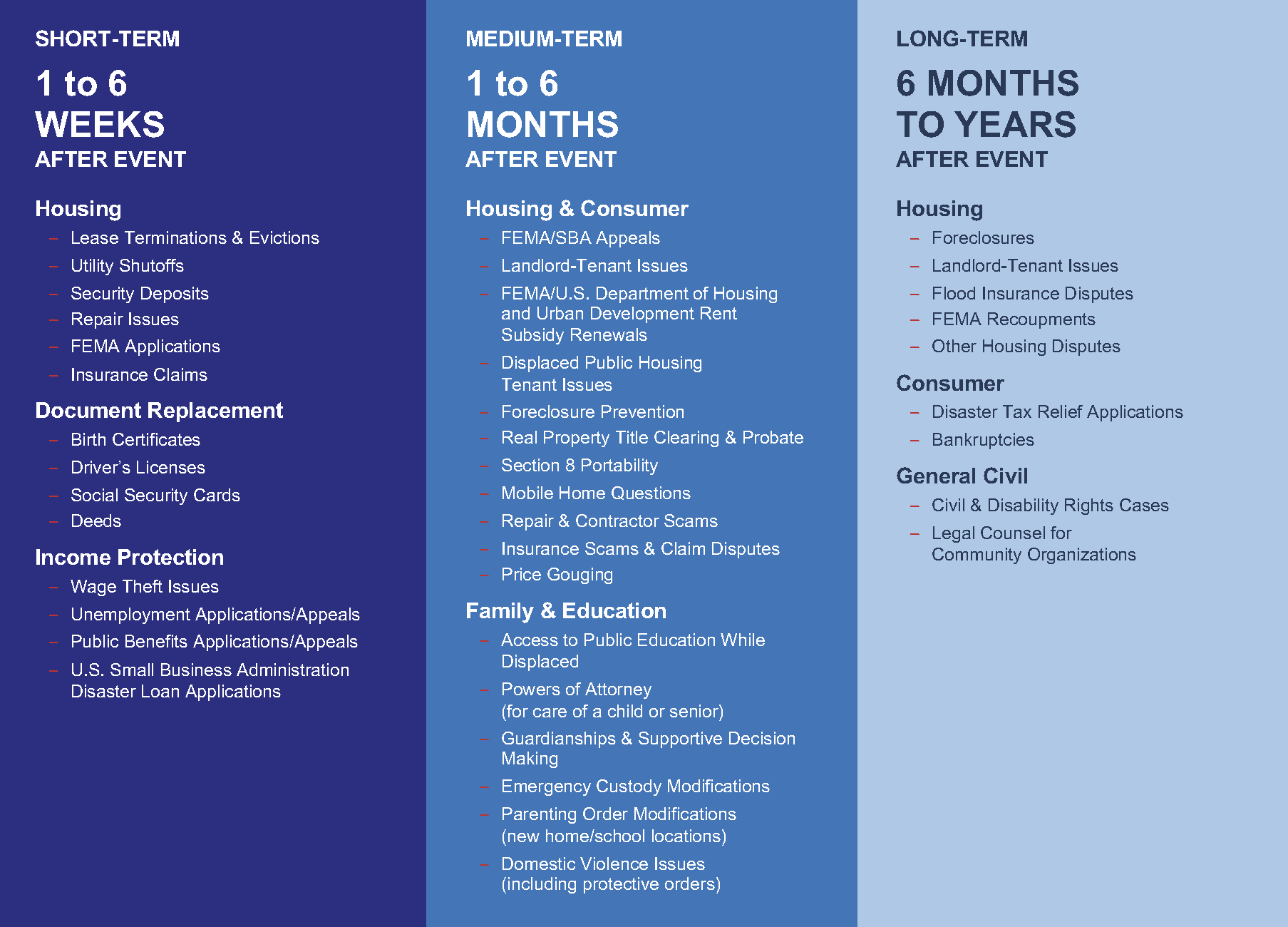
There are many legal needs that are immediately apparent after the disaster, however, there are still civil legal issues that can arise during different stages of recovery.
This is important to recognize as you may not think to associate the legal issue with the disaster.
Timeline of Post-Disaster Civil Legal Issues
Public Benefits After a Disaster
When a disaster occurs, your circumstances can change drastically. Public benefits can help ensure that you have the food, medical coverage, financial assistance, and housing assistance that you need.
Emergency assistance is available to individuals and families and are provided by either State or Federal benefit programs.
- Food Assistance is a critical need for many individuals and families affected by a disaster. Several programs and initiatives are activated to ensure that those impacted have access to food during a disaster.
- Housing Assistance programs are mobilized to support affected individuals and families in finding suitable shelter, repairing damaged homes, or assisting with the transition to new permanent residences, if necessary.
- Financial Assistance programs aid individuals and families in their recovery efforts. These resources target both immediate and long-lasting financial requirements stemming from disaster-induced damage.
State & Local Assistance
- New Mexico Health Care Authority (aka Human Services Department) extends assistance through initiatives such as:
- Disaster Supplemental Nutrition Assistance Program (D-SNAP): for those not regularly enrolled in SNAP but requiring food aid due to a disaster.
- Replacement SNAP Benefits: This program offers replacement SNAP benefits to households who are already receiving SNAP benefits and have lost food due to disasters such as a hurricane, flood, or power outage.
- Supplemental SNAP Benefits: This program offers supplemental benefits to existing SNAP recipients’ benefits when there are disaster situations.
- Emergency SNAP Benefits: Regular SNAP recipients may receive additional or emergency SNAP benefits post-disaster.
Other benefits can include Medicaid, LIHWAP (water assistance), TANF (cash assistance) and LIHEAP (energy assistance).
Visit the YesNM online portal to quickly and easily apply, check, update, or renew for a variety of programs. You can also call the Health Care Authority from 7:00 a.m. to 6:30 p.m. at 1-800-283-4465.
- New Mexico Women, Infants, and Children (WIC) Program (or Special Supplemental Nutrition Program for Women, Infants, and Children) – WIC provides free healthy food, nursing support, basic nutrition education, and referrals to other services that may be helpful for women (currently pregnant or with children under 5 years of age), infants and children. Information on applying for WIC.
New Mexico Department of Homeland Security and Emergency Management (DHSEM): The state works closely with FEMA and HUD to implement and oversee recovery programs. This unit administers various programs designed to rebuild and rejuvenate affected areas, including financial assistance for housing and infrastructure restoration.
Department of Homeland Security and Emergency Management (DHSEM) website.
Local Governments: Local administration often establishes emergency operations centers to coordinate disaster responses, encompassing rescue missions, temporary shelters, and the distribution of provisions, like food and supplies. Consult your local emergency management authorities, voluntary organizations, or dial your local 2-1-1 for assistance. They may also provide resources and support through their own housing departments or partnerships with local non-profits and community organizations.
- Insurance Claims: Individuals holding insurance policies may access financial aid by submitting claims for covered losses, encompassing damage to homes, personal belongings, and vehicles. Familiarize yourself with your policy terms. If you don’t possess a copy, reach out to your agent or insurer and ask for one. Retain your receipts. In case of evacuation or displacement, ensure you retain duplicates of all expenses like dining, lodging, and other necessary costs incurred due to inability to return home.
Claims should be lodged with your insurance provider, although the New Mexico Office of Superintendent of Insurance (OSI) may offer guidance to citizens regarding insurance queries and the claims procedure.
Federal Assistance
Federal Emergency Management Administration - FEMA’s Individuals and Households Program (IHP): Provides financial help or direct services to those who have necessary expenses and serious needs if they are unable to meet these needs through other means. This can include temporary housing assistance (rental assistance, hotel/motel vouchers), home repair assistance for uninsured or underinsured damage, and in extreme cases, home replacement.
You can log into FEMA's DisasterAssistance.gov to find disaster related information.
- Small Business Administration (SBA) - Home and Personal Property Loans: The SBA offers disaster loans to homeowners to repair or replace damaged or destroyed real estate in a declared disaster area.
- Disaster Unemployment Assistance (DUA): DUA provides unemployment benefits to those who have lost their jobs directly due to a disaster, and who aren’t eligible for regular unemployment insurance.
U.S. Department of Housing and Urban Development (HUD): Offers programs for long-term recovery, including the Community Development Block Grant Disaster Recovery (CDBG-DR) program, which supports the repair of homes, businesses, and infrastructure.
For more information about HUD disaster resources visit HUD.
- United States Department of Agriculture (USDA): The USDA offers various disaster assistance programs for losses in crops and livestock, as well as for the rehabilitation of farmland, watersheds, forests, and to provide support for rural businesses and homes.
- National Resources Conservation Service (NRCS)/Farm Service Agency (FSA) & Risk Management Agency: Offers voluntary financial assistance, technical assistance and support, and partnership programs. For more information on NRCS click here, and to find more information on disaster assistance click here.
- Social Security Disability Insurance: If you have a disability that prevents you from working, you may be eligible for Social Security Disability Insurance (SSDI). SSDI is a federal program that provides monthly cash benefits to people who have worked, paid Social Security taxes, and now have a disability that prevents them from working.
Non-Profit & Community Based Assistance
American Red Cross: The American Red Cross provides 24/7 emergency assistance, disaster relief and recovery support by opening shelters, feeding victims, providing emergency supplies, distribution relief items via vehicles, offering mental health support, and financial aid to those in need.
Salvation Army: The Salvation Army provides immediate emergency relief and long-term recovery services during disasters, focusing on food, shelter, and emotional support. They deploy mobile feeding units, supply cleanup kits, provide financial assistance, and offer spiritual care to survivors and first responders.
Habitat for Humanity: Habitat for Humanity provides disaster response by focusing on long-term housing recovery, including cleaning up debris, repairing damaged homes, and rebuilding new, resilient homes. They offer technical assistance, training in disaster-resilient construction, and emergency shelter kits, supporting communities from initial cleanup to permanent housing solutions.
How to Reach Us!
If you’re facing a disaster-related legal issue, we’re here to assist you. Here’s how you can contact us:
- Call our Disaster Hotline at 1-855-204-2569, Monday to Friday, from 9 a.m. to 5 p.m., or leave a message 24/7.
- Email the Disaster Legal Services Team at disasterlegalservices@nmlegalaid.org.
- Follow Us On Facebook for Quick Legal Tips & Updates:
